



Contents List
- 1 300 Runs in Test Cricket
- 2 The Real Meaning Behind 300 Runs in Test Cricket
- 3 300 Runs in Test Cricket by an Indian Player
- 4 Fastest 300 Runs in Test Cricket – Is Speed Even Possible?
- 5 What Most Fans Don’t Know
- 6 Real Match Scenario – How a Triple Century Builds
- 7 Common Mistakes Fans Make
- 8 FAQs
- 9 Final Thoughts
300 Runs in Test Cricket
There’s something almost mythical about a triple century. You don’t just score 300 runs in Test cricket—you outlast time, bowlers, and pressure itself. Even in today’s fast-scoring era, reaching 300 remains one of the rarest and most respected achievements in the game.
So what does it really mean to score 300 runs in Test cricket—and why does it still matter so much? Let’s break it down like a true cricket fan.
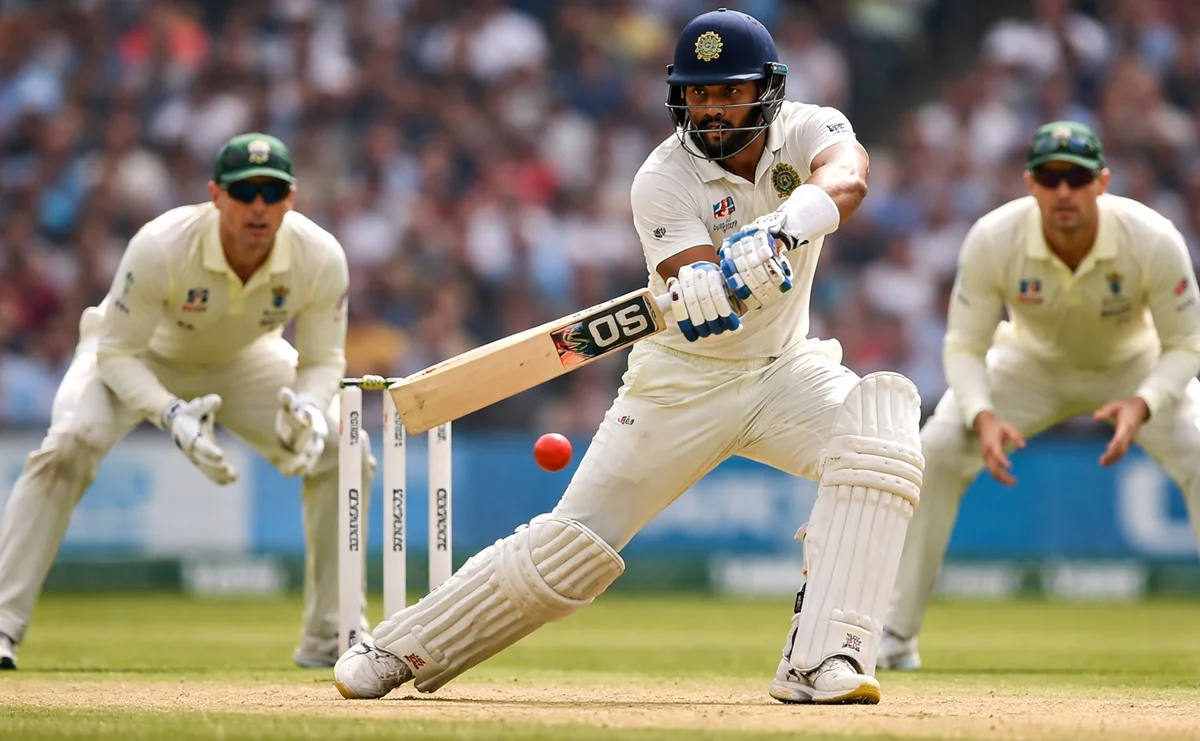
Scoring 300 runs in Test cricket means a batsman reaches a triple century in a single innings. It is one of the rarest milestones in cricket, achieved by only a small group of elite players due to the extreme concentration, stamina, and skill required over long periods.
The Real Meaning Behind 300 Runs in Test Cricket
On paper, it’s simple: bat long enough, score enough runs, and reach 300. But here’s the interesting part…
A triple century isn’t just about scoring—it’s about survival, control, and dominance across multiple sessions.
Unlike limited-overs cricket, Test matches stretch over five days. To score 300:
- You must bat for 8–12 hours or more.
- Face 400–600 deliveries
- Adapt to changing pitch conditions.
- Outsmart multiple bowling spells and strategies.
That’s why when someone achieves 300 runs in Test cricket, it’s seen as a complete batting masterclass, not just a big score.
300 Runs in Test Cricket by an Indian Player
India has produced some iconic triple centuries, and each one tells a different story.
- Virender Sehwag – The first Indian to reach 300, known for fearless batting
- Karun Nair – Scored an unbeaten 303 in only his third Test match.
If you’re wondering who scored 300 runs in Test cricket from India, these names stand out—not just for the numbers, but for how they did it.
Sehwag, for example, didn’t “grind” his way to 300—he attacked like it was a T20. That changed how people viewed Test batting forever.
Fastest 300 Runs in Test Cricket – Is Speed Even Possible?
Test cricket is about patience—but some players break that rule completely.
- Virender Sehwag holds one of the fastest triple centuries in Tests.
He reached 300 at a strike rate that most players can’t maintain even in ODIs.
👉 Most fans don’t realize:
Scoring fast in Tests is actually riskier than scoring slowly. One mistake, and hours of work are gone. So when someone scores a fast 300, it’s not just impressive—it’s borderline unreal.
Scoring fast in Tests is actually riskier than scoring slowly. One mistake, and hours of work are gone. So when someone scores a fast 300, it’s not just impressive—it’s borderline unreal.
What Most Fans Don’t Know
Let’s bust a few myths.
- Triple centuries are not always match-winning
Surprisingly, some 300s come in drawn matches. Why? Because they consume time. - It’s harder today than before (controversial opinion)
Some fans argue modern cricket is easier due to flatter pitches. - But honestly?
With DRS, advanced analytics, and relentless bowling rotations, it’s arguably harder to survive long enough for 300 today. - Mental fatigue is the real enemy
Physical stamina matters, but staying focused for 10+ hours is what breaks most players.
Real Match Scenario – How a Triple Century Builds
Imagine this:
Day 1: A batsman starts cautiously, ends on 85*
Day 2: Builds partnerships, reaches 180
Day 3 morning: Crosses 250, bowlers look exhausted
Day 3 afternoon: Finally reaches 300
This isn’t just batting—it’s a slow takeover of the game.
By the time a player reaches 300:
- Bowlers are mentally drained.
- Fielders lose intensity
- The match momentum completely shifts.
That’s the real power of a triple century.
Common Mistakes Fans Make
- Thinking 300 is just a “big score.”
No—it’s a rare event. Many greats never reached it. - Comparing it with T20 centuries
Different worlds. A triple century requires endurance, not just aggression. - Ignoring context
A 300 on a flat pitch ≠ , a 300 on a turning or seaming track.
FAQs
- Who scored 300 runs in Test cricket?
Only a limited number of elite players have scored triple centuries, including legends like Don Bradman and Brian Lara.
- Who scored 300 runs in Test cricket for India?
Virender Sehwag and Karun Nair are the Indian players who achieved this milestone.
- What is the fastest 300 in Test cricket?
Virender Sehwag scored one of the fastest triple centuries, known for his aggressive style.
- How rare is a triple century in Test cricket?
Extremely rare. Only a handful of players in cricket history have achieved it.
- Is a 300-run match always match-winning?
Not always. Some triple centuries end in draws, depending on the match situation and time left.
Final Thoughts
A triple century isn’t just a number—it’s a statement of control over the game.
In an era dominated by T20 fireworks, scoring 300 runs in Test cricket still feels like the purest form of greatness.
And here’s the debate fans still argue about…
👉 Is a quickfire 150 in modern cricket more impactful than a slow 300 in Tests?
Some say yes.
But deep down, every true cricket fan knows:
But deep down, every true cricket fan knows:
Nothing matches the aura of a triple century.


