


What Is Follow On in Test Cricket?
Follow on in Test cricket happens when the team batting second scores 200 runs fewer than the team batting first in a five-day match. In this situation, the team ahead can force the opposition to bat again immediately rather than taking their own second innings. This rule is used to save time and increase the chance of winning the match.
Why Does the Follow On Rule Exist?
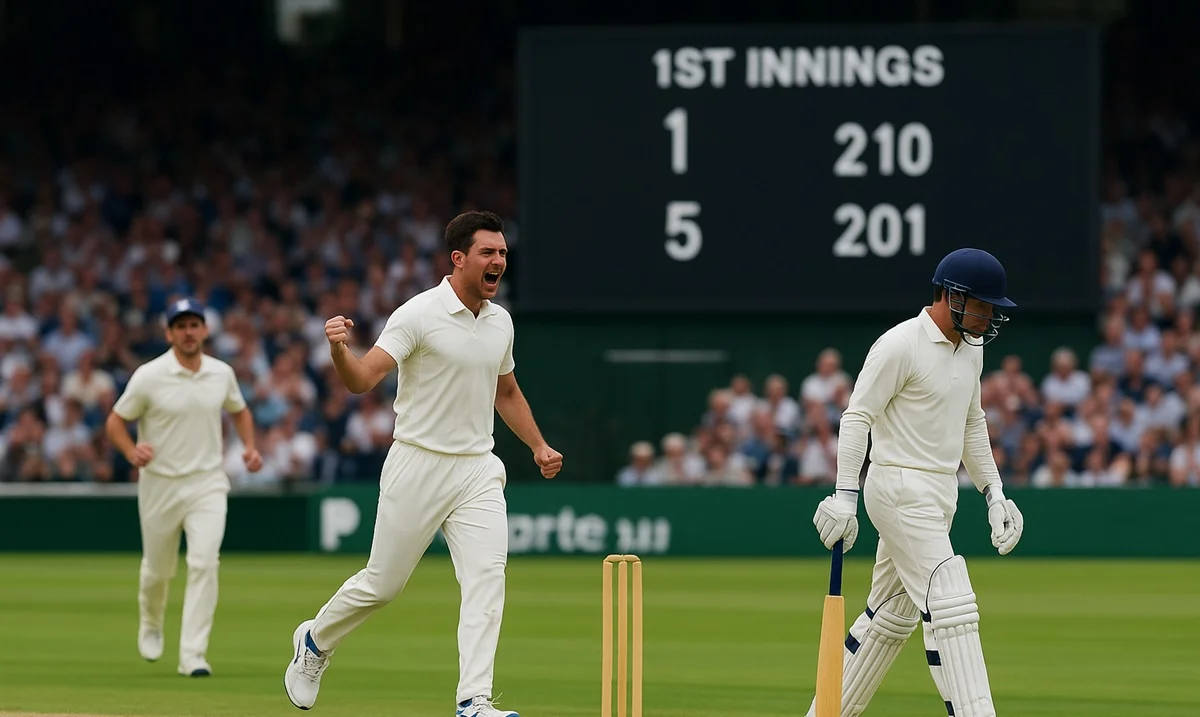
Understanding the Follow On: A Simple Explanation
What is follow on in Test cricket?
Follow on is a rule in which the team batting second is asked to bat again immediately because they are far behind in runs.
There is no break, no waiting for the first team to bat again, and no change in batting order. It is like saying: “You did not score enough in your first innings. Now try again—right now.” This rule makes Test cricket intense because the trailing team suddenly comes under massive pressure.
How Follow On Works (Step-by-Step)
Step 1 — Team A bats first
They set a score.
Step 2 — Team B bats second
They chase the score.
Step 3 — Run Difference Is Calculated
If Team A leads by 200 or more runs, follow on becomes possible.
Step 4 — Team A’s Captain Decides
He can choose to enforce the follow on or not.
Step 5 — If Follow On Is Enforced
Team B bats again immediately for their second innings. This is the core logic behind what is follow on in Test cricket — it gives the stronger team a chance to push for a fast victory.
The Magic of the 200-Run Lead
One of the most asked questions is: “What is the follow on rule in Test cricket?”
The answer: In a five-day Test match, the team batting first must lead by 200 runs to enforce a follow on. This 200-run difference is not a random number. Traditionally, it is considered a big enough lead to give the dominant team a solid advantage, while still giving the trailing team a fighting chance.
Example:
- Team A scores: 450
- Team B scores: 230
- Difference: 220 runs
Since the lead is more than 200, Team A can enforce the follow on.
Why Follow-On Creates Tremendous Pressure
Batting in Test cricket requires patience, mental focus, and strong technique. Most teams prefer batting with a break between innings because it allows:
- Rest
- Tactical planning
- Pitch study
- Resetting the mindset
But when a team is forced to follow on, they get none of that.
They must bat again:
- Tired
- Mentally shaken
- On a deteriorating pitch
- With bowlers still fresh and confident
- Under the scoreboard pressure of a huge deficit
This is why teams fight hard to avoid the follow on.
Real Example: The Most Famous Follow On Match
You can’t talk about what is a follow on in Test cricket without mentioning one iconic match:
India vs Australia — Kolkata Test, 2001 (Eden Gardens)
- Australia enforced the follow on.
- India batted again immediately.
- VVS Laxman (281) and Rahul Dravid (180) played one of the greatest partnerships ever.
- India not only avoided collapse, but they also won the match.
- It became one of the biggest turnarounds in cricket history.
This match also made the captains more cautious. They realized that enforcing follow on can backfire if the opposition finds confidence.
Why Captains Sometimes Avoid Enforcing the Follow On
Even if the team is leading by 200 runs, enforcing the follow on is not compulsory. Captains avoid it due to:
1. Bowlers’ Fatigue
If bowlers have bowled 100–120 overs, they need rest.
2. Pitch Conditions
Some captains prefer batting again because they know the pitch will break down later, which will help their bowlers more.
3. Strategic Safety
A huge target (like 450+) removes all pressure.
4. Fear of a Big Comeback
After Kolkata 2001, captains became more cautious.
5. Weather Considerations
Sometimes rain may cut time, so follow on is enforced to save hours. This shows that follow on is not just a rule—it is a strategy.

Why Teams Fight Hard to Avoid the Follow On
Now, let’s understand what is an avoid follow is in Test cricket. The phrase “avoid follow on” simply means: The batting team must score enough runs so that the first team’s lead falls below 200. If the lead is less than 200, follow on cannot be enforced.
Example:
- Team A makes 400
- Team B needs 201 to avoid follow on
- If they make 205 → no follow on possible
- If they make 180 → follow on is possible
Avoiding follow on is like escaping a trap. It gives the team a fresh chance to build momentum again.
How the Pitch Affects Follow On Decisions
Pitch conditions heavily influence whether follow on should be enforced.
If the pitch is fresh: Bowlers may be tired, so the captain avoids a follow on.
If the pitch is deteriorating: Follow on becomes a dangerous choice for the batting team.
If cracks are appearing: Spin becomes powerful, influencing tactics.
Psychological Impact: The Hidden Factor
The follow on is not just about runs. It deeply affects players’ minds.
For the batting team:
- They already performed poorly
- Now they must bat tired
- There is no mental reset
- They feel pressure and fear of collapse
For the bowling team:
- They smell victory
- Confidence doubles
- Fielders get energized
- The captain attacks aggressively
This mental game is why fans love follow on scenarios.
Modern Cricket and the Follow On Rule
In recent years, follow on is enforced less frequently because:
- Players’ workloads are managed more carefully
- Pitch behavior is studied more deeply
- Team strategies have evolved
- Back-to-back matches require fitness conservation
Still, the moment a follow on becomes possible, commentators, fans, and players all start buzzing. Because the rule can change a match overnight.
Advantages of Follow On in Test Cricket
The follow on rule has several benefits for the leading team.
Higher Chance of Winning
If the opposition collapses again, the match can finish quickly.
Less Time Needed
The leading team does not need to bat again, saving valuable time in the match.
Constant Pressure
Disadvantages of Follow On
Although it can help win matches faster, enforcing the follow on also has risks.
Tired Bowlers
Bowling two long innings in a row can exhaust fast bowlers. This can reduce their effectiveness.
Pitch Becoming Easier
Sometimes the pitch becomes easier to bat on later in the match. If that happens, the follow-on team may score a very big total.
Momentum Shift
FAQ 1: What is follow on in Test cricket?
Follow-on is a rule where the team batting second must bat again immediately if they fall 200 runs behind the first team. It is used to increase the chances of a result and reduce the possibility of a draw.
FAQ 2: What is a follow on in Test cricket, in easy words?
In easy words, follow on means: “You are far behind in runs, so you must bat again right away.” This second chance comes instantly, without waiting for the first team to start its second innings.
FAQ 3: What is the follow on rule in Test cricket?
The follow-on rule states:
- In a 5-day Test match, if Team A leads Team B by 200 or more runs, Team A can force Team B to bat again.
- This rule helps maintain excitement in long-format cricket.
FAQ 4: What is a follow-on in Test cricket, and why is it important?
A follow-on is important because it gives the leading team a strategic advantage. By making the opposition bat again, they continue applying pressure, increasing chances of victory.
FAQ 5: What is avoiding follow on in Test cricket?
“Avoid follow-on” means the batting team must score enough runs so that the first team’s lead becomes less than 200. For example, if Team A scores 450, Team B needs at least 251 to avoid follow-on.
FAQ 6: Can a team win after being forced to follow-on?
Yes, but it is rare. The most famous example is India vs Australia (2001), where India won after being forced to follow on.
FAQ 7: Is enforcing follow-on compulsory?
No. Even if the lead is 200 runs or more, the captain can choose not to enforce it.
FAQ 8: Why do some captains avoid enforcing the follow-on?
Captains often avoid enforcing follow on because:
- Bowlers are tired
- Pitch will break down later
- They want to set a massive target
- Weather conditions
- Risk of a comeback
Quick Summary: Follow On in Test Cricket
- Follow-on in Test cricket occurs when the team batting second is 200 runs behind in a five-day match.
- The leading captain can force the opposition to bat again immediately.
- The rule exists to save time and increase the chance of a result.
- Captains enforce it when they believe their bowlers can finish the match quickly.
- However, teams sometimes avoid it to rest bowlers or take advantage of changing pitch conditions.


