


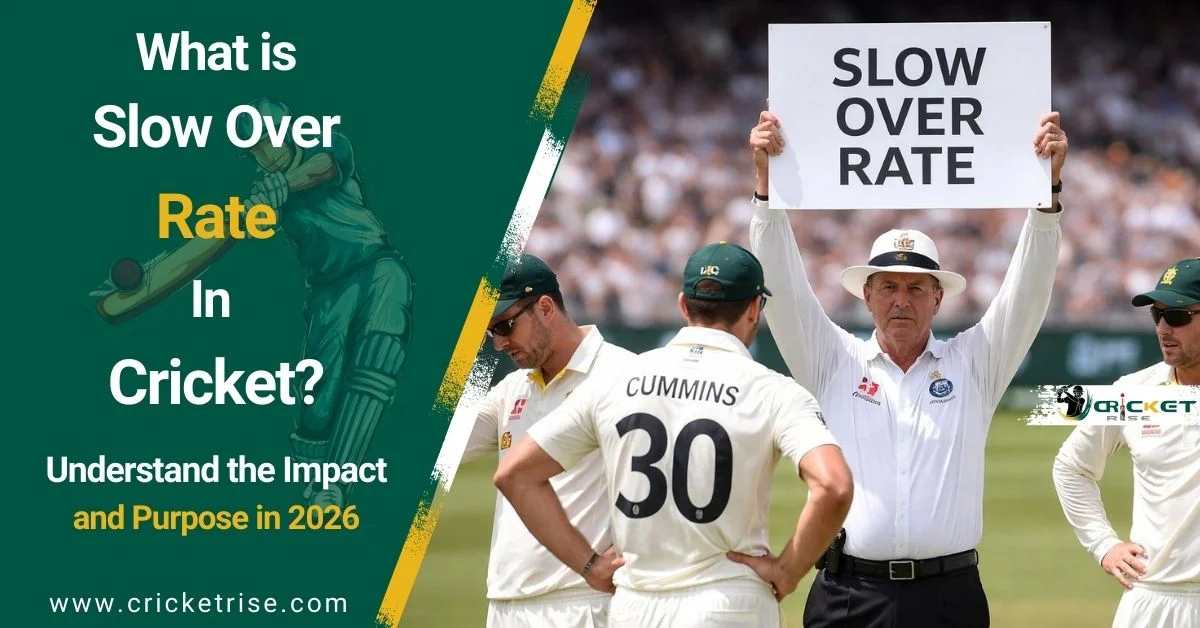
What Is Slow Over Rate in Cricket?
Slow over rate in cricket means a team fails to bowl the required number of overs within the allotted time set by the match rules. This usually happens due to slow field changes, injuries, excessive discussions, or deliberate time wasting, and can result in penalties or fines.
Cricket requires patience, skill, and timing. In recent years, however, slow over rates have become a growing concern for fans, players, and officials. For example, a Test match may feature only 80 overs bowled instead of the expected 90, or a captain may be fined after a match, often leaving viewers unclear about the reasons.
In this article, we’ll break down slow over rate in simple terms. You’ll find out why it matters, how it affects today’s cricket, what the rules are, and what could change after 2026.
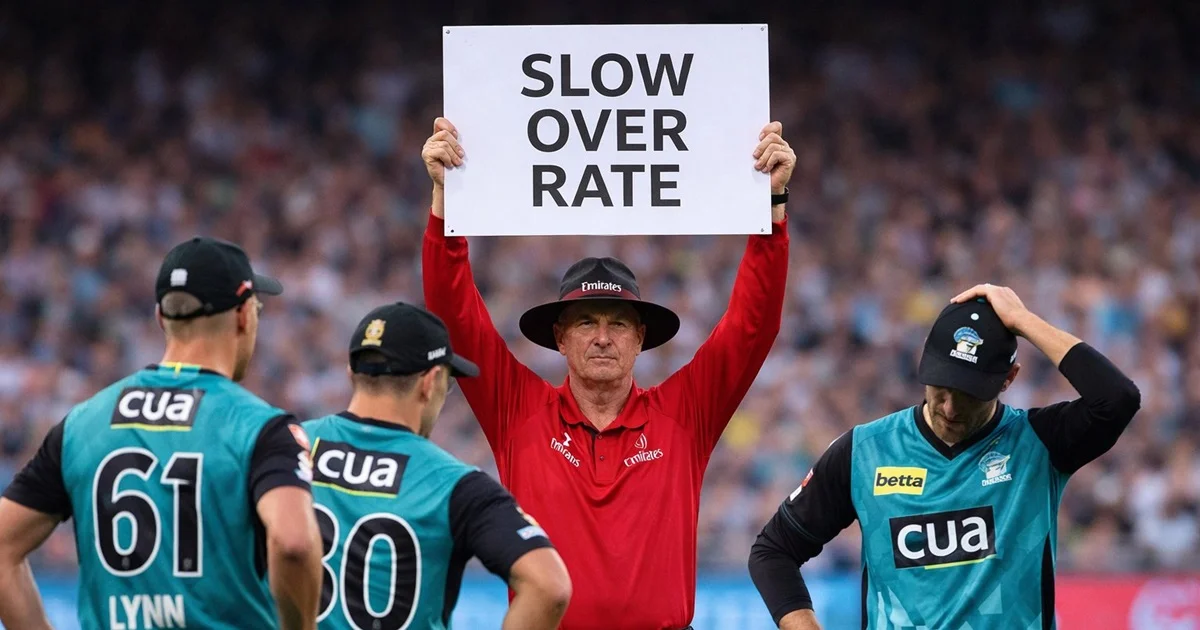
So, What Is Slow Over Rate in Cricket in all Formats?
Let’s start with the basics.
In cricket, the fielding team is expected to bowl a certain number of overs within a fixed time. If they fail to do so, it is called a slow over rate.
For example, in Test cricket, teams are usually expected to bowl about 90 overs in a day. If they bowl fewer without a good reason, they’re considered slow.
This rule exists in all formats:
- Test matches
- One Day Internationals (ODIs)
- T20 Internationals
The time allowed can change with each format, but the main idea is the same: don’t waste time.
Slow over rate is not always intentional. Sometimes injuries, weather, or ball changes cause delays. But often, it happens because of poor planning, slow field placements, or unnecessary discussions between players.
Why Slow Over Rate Became a Serious Problem
A few years back, most fans didn’t pay much attention to slow over rates. Matches were long, and delays were just part of the game. But cricket has changed.
Today’s cricket audience wants:
- Faster action
- Clear results
- Better viewing experience
When overs are delayed, matches lose their flow. Fans at the stadium get bored, TV viewers change the channel, and even players can lose focus.
That’s why cricket’s over-rate rules have become stricter over time. The game needed more control, and slow over rates were making it look bad.
A Real Match Situation: Why Fans Get Angry
Imagine this situation.
It’s the fifth day of a Test match. One team needs seven wickets to win, and the crowd is buzzing. But then, tea breaks drag on, fielders move slowly, and bowlers take extra time between balls.
At the end of the day, only 70 overs are bowled.
The result?
No winner.
Fans feel let down.
The match ends in a draw.
No winner.
Fans feel let down.
The match ends in a draw.
Such situations highlight the necessity of slow over rate regulations.
Official Over Rate Rules Explained Simply (2026 Update)
You don’t have to read the ICC rule book to get this.
Here is a simple breakdown:
Test Cricket
- Teams must bowl the required overs each day.
- If they fall short, penalties apply.
- Extra time allowances are given only for valid delays.
ODI Cricket
- Each innings has a time limit.
- The fielding team must finish overs within that time.
T20 Cricket
- Time limits are very strict.
- Even a few minutes’ delay can lead to penalties.
In all formats, the captain is held responsible, which is why captains are often fined even if delays are not entirely their fault.
What Happens If a Team Has a Slow Over Rate?
Slow over rates are now treated seriously, and penalties can be significant.
1. Match Fee Fines
Players may be fined a percentage of their match fee, with captains typically incurring higher penalties than other players.
2. Points Deduction
In Test cricket, teams may lose World Test Championship points, which can significantly alter the final standings.
3. Captain Reputation Damage
Repeated slow over rate offenses can damage a captain’s reputation, as leadership is evaluated by both results and discipline.
Famous Slow Over Rate Penalty Examples
Many leading teams have received slow over rate penalties over the years, and even world-class captains have been fined.
These examples demonstrate one clear lesson:
No team is above the rules.
The ICC prioritizes fairness, applying slow over rate penalties equally to all teams, regardless of ranking.
Why Slow Over Rate Affects Match Results
Many believe slow over rates only result in fines, but this is not the case.
Here’s how it affects results:
- Fewer overs mean fewer chances to take wickets.
- Batting teams may benefit from time constraints.
- Weather-affected matches become unfair.
In tournaments, losing a point due to a slow over rate can determine whether a team qualifies or is eliminated.
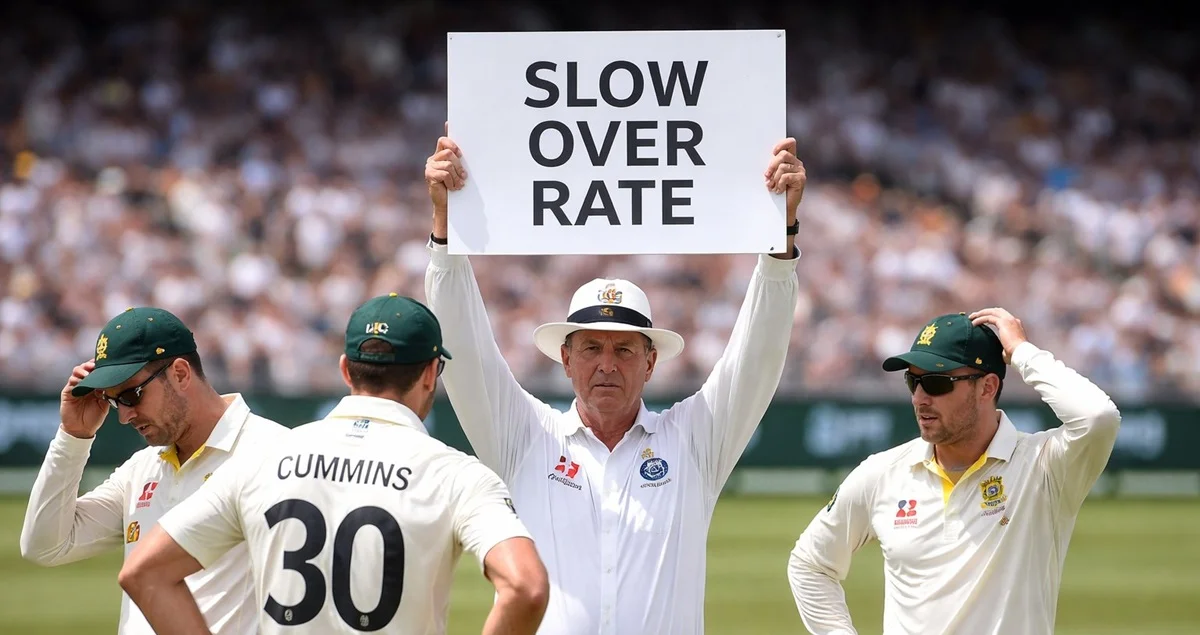
How Teams Try to Avoid Slow Over Rates
Teams are now taking this issue very seriously.
Better Planning
Captains plan bowling changes in advance.
Faster Field Placements
Fielders move quickly to their positions.
Fitness Improvement
Fit players reduce injury delays.
Use of Technology
Time tracking systems help umpires monitor over-rates accurately.
Role of Umpires in Controlling Over Rate
Umpires play a key role.
They:
- Warn captains
- Monitor time closely
- Allow time only for genuine delays.
Their job is not easy, but it is important for fair play.
Is the Slow Over Rate Rule Fair?
This is a common debate.
Supporters Say:
- It protects fans
- It improves match quality.
- It stops negative tactics.
Critics Say:
- Test cricket should flow naturally.
- Pitch conditions slow the game.
- Weather interruptions cause unfair penalties.
Both sides have valid points. That is why ICC keeps adjusting rules instead of removing them.
How Slow Over Rate Changed Modern Cricket
Earlier, teams focused only on winning. Now they focus on winning within time.
This change has:
- Improved match speed
- Increased excitement
- Made cricket more viewer-friendly
Slow over-rate rules have forced teams to respect time as much as skill.
What 2026 Means for Slow Over Rate Rules
By 2026, slow over rate is no longer a small rule. It is a core part of cricket discipline.
Experts believe:
- Rules may become stricter.
- Technology will play a bigger role.
- Captains will face more responsibility.
The goal is simple: keep cricket exciting without losing its soul.
Why Every Cricket Fan Should Understand Slow Over Rate
Understanding a slow over rate helps you:
- Read match situations better.
- Understand penalties clearly
- Appreciate fair play
It turns you from a casual viewer into a smarter cricket fan.
Final Thoughts
So, what is slow over rate in cricket?
It is not just about time. It is about respect for the game, the fans, and fair competition.
In 2026, slow over rate rules are shaping how cricket is played. Teams that manage time well gain an edge. Those who ignore it pay the price.
Cricket will always be a game of patience, but patience should never become delay.


