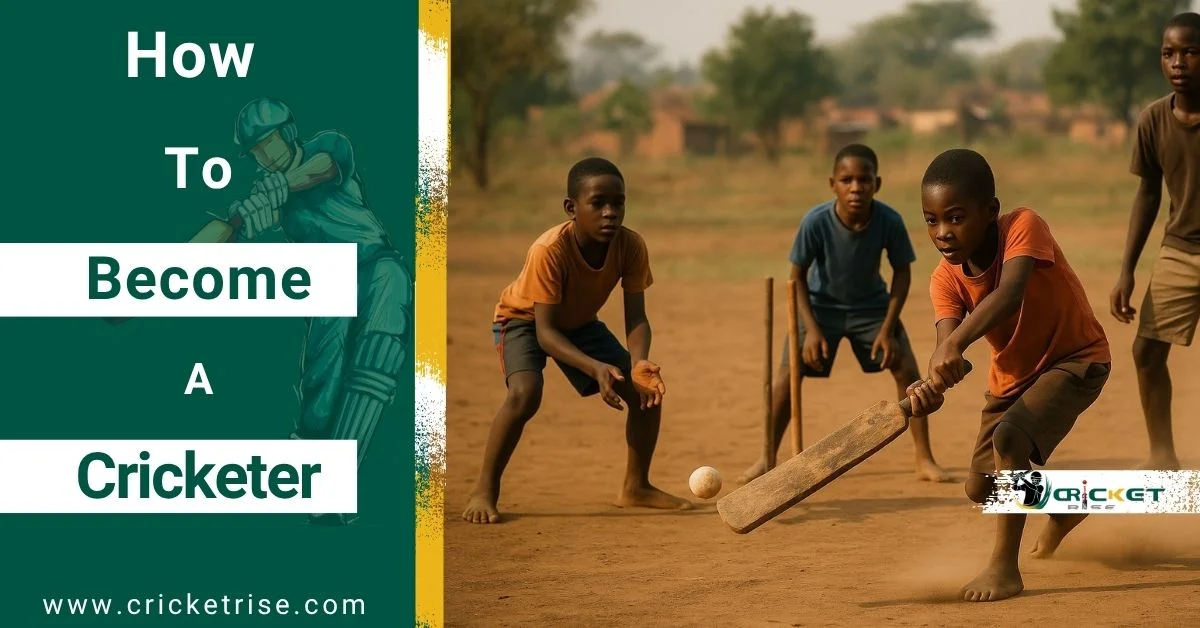
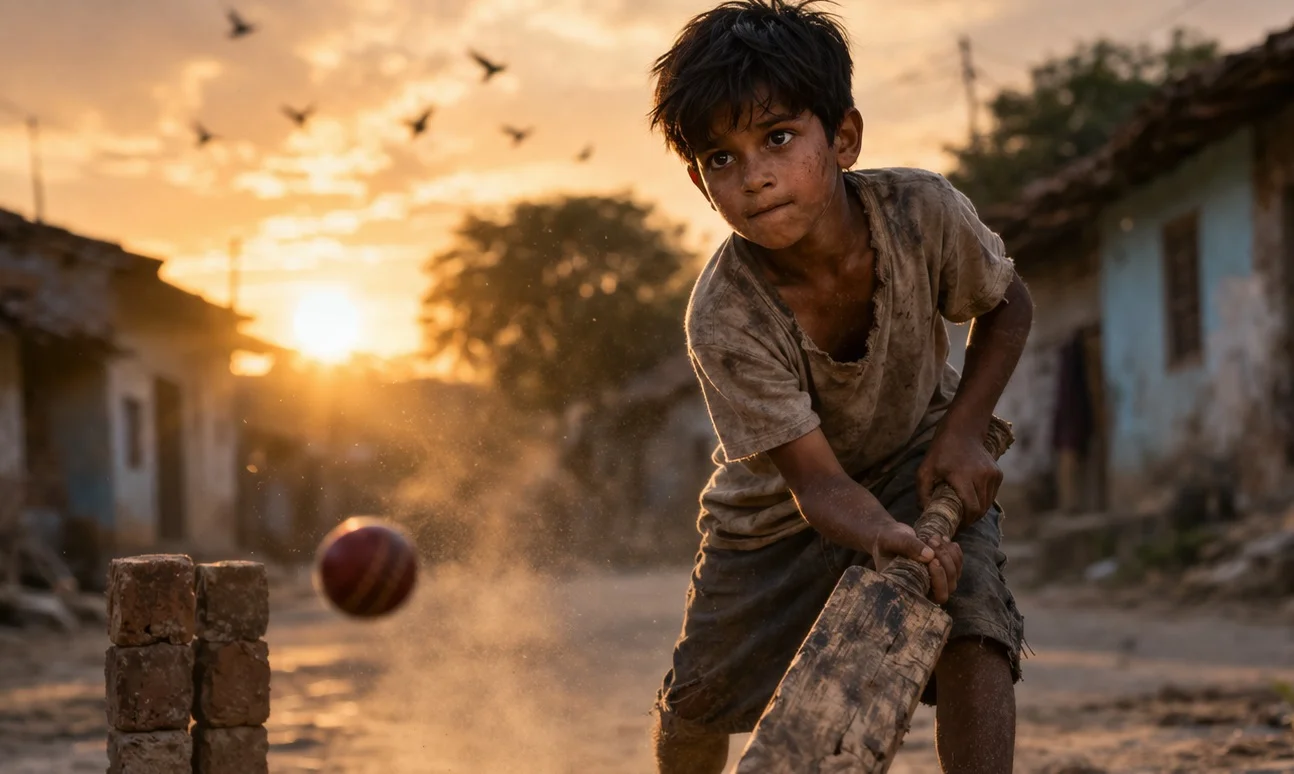
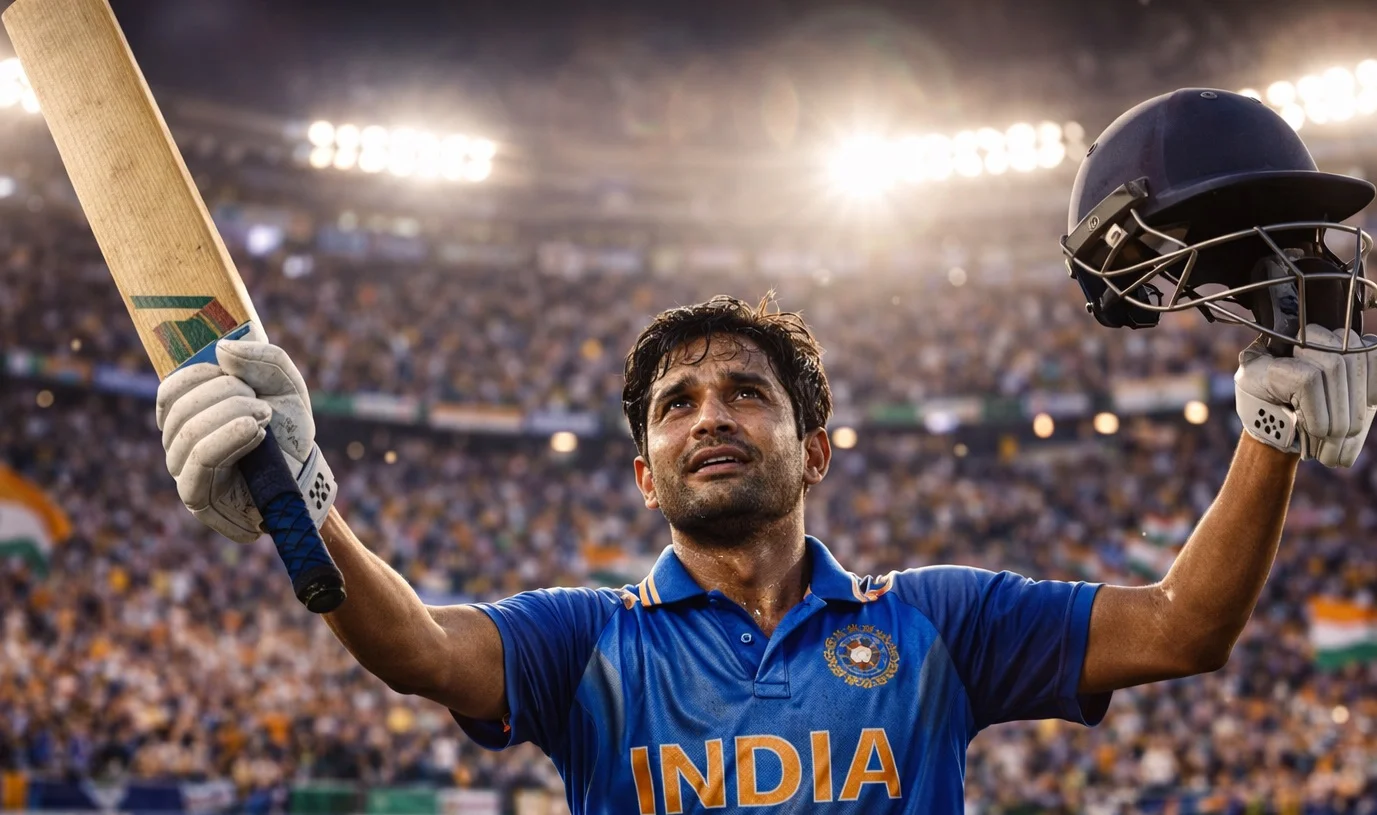
There’s a moment every cricket fan has imagined — walking out to bat, crowd roaring, the bowler running in… and you’re living the dream. But here’s the truth: most people don’t say out loud that becoming a cricketer isn’t about talent alone — it’s about a system, discipline, and surviving the grind. So if you’re seriously asking how to become a cricketer, this guide gives you the real roadmap, not just motivational talk.
Quick Answer: How to Become a Cricketer?
To become a cricketer, you need to:
Start playing regularly (school, street, or local clubs) Learn basic skills (batting, bowling, fitness) Join a cricket academy or train consistently (even without one) Play competitive matches and perform. Get noticed through trials, leagues, or selectors.
Consistency + performance in matches = selection opportunities.
Why Becoming a Cricketer Is a Dream Career
Passion vs Profession Cricket starts as emotion. Street matches. Tape-ball battles. That one shot you replay in your head a hundred times. But somewhere along the way, it shifts. The game stops being just fun and starts demanding something back — discipline, sacrifice, and consistency. That’s where many people drop off. Because loving cricket and building a career in cricket are two completely different things. The ones who make it? They learn to balance both.
Modern Cricket Opportunities This isn’t the 90s anymore. Back then, international cricket was the only real stage. Today, the game has exploded:
Franchise leagues like the Indian Premier League
Global tournaments like the ICC Men’s T20 World Cup
Domestic circuits that scouts actually watch
You don’t need to be a national player to earn from cricket anymore. If you’re good — really good — there’s a path.
What People Get Completely Wrong About Becoming a Cricketer
There’s a common belief: “Join an academy, buy good gear, and you’ll become a cricketer.”
That belief is half-truth, half-illusion. Yes, facilities help. Coaching helps. But they don’t guarantee anything.
In fact, many talented players disappear after a few years because:
They rely only on nets, not real matches.
They lose confidence after failure.
They expect quick results.
Cricket rewards consistency, not shortcuts. Another big myth is about money. People often ask: ” How much money is needed to become a cricketer?
Here’s the reality:
Basic gear can be affordable.
Local cricket can cost very little.
But professional exposure (travel, tournaments, coaching) does require investment.
Still, money is not the biggest barrier — mindset is. There are players who made it with very little. And there are players who had everything… and still didn’t. The difference? One kept showing up. The other stopped.
Starting From Zero (Even Without an Academy)
Let’s be honest — not everyone has access to top academies. But here’s something most people don’t realize:
You can absolutely learn how to become a cricketer without academy support — if you play smart.
Many great cricketers didn’t start in perfect environments. They started where they could.
Street cricket. School grounds. Local clubs. What matters is not where you start, but how you use it.
Focus on three simple things early:
Play Real Matches Nets don’t teach pressure. Matches do. Learn how to handle fear, mistakes, and real competition.
Improve One Skill at a Time Don’t try to be perfect at everything. Be known for something — strong batting, accurate bowling, sharp fielding.
Watch and Learn Observe better players. Copy techniques. Adjust. Improve.
This is how raw players become serious cricketers. And here’s a truth many ignore:
An academy can guide you, but it cannot play for you. If you’re not improving outside coaching hours, you’re already falling behind.
Climbing the Ladder (Where Real Cricket Begins)
This is where dreams start getting tested. Playing casually is one thing. Playing competitive cricket is another world.
To move forward, you need to enter structured cricket:
School teams
Club cricket
District trials
Local tournaments
This is where selectors start noticing players.
But here’s the catch: Talent alone is not enough at this stage. You need performance under pressure. You need consistency and most importantly, you need patience. Because selection is not always fair.
Sometimes, better players get ignored. Sometimes, average players get chances.
That’s the harsh truth of cricket.
But the ones who make it understand one thing: You don’t control selection — you control performance. Keep scoring runs. Keep taking wickets and improving fitness.
The “India Path” & System Explained Simply
If you’re wondering how to become a cricketer in India, the structure is clear — but extremely competitive.
But here’s the reality: Millions try. Only a few thousand reach the state level. Even fewer go beyond. India’s cricket system is one of the toughest in the world.
Why?
Because talent is everywhere. So how do players stand out?
Big performances in important matches
Strong mental game
Fitness and discipline
Ability to handle pressure
And today, things have changed. Thanks to T20 leagues and social media, players can get noticed faster than before. But that doesn’t mean it’s easier. It just means the spotlight is bigger — and the competition is even tougher.
Money, Backup Plans & A Truth Fans Don’t Like
Let’s talk about something most guides avoid.
Money.
Cricket is not just a passion — it’s also an investment. Equipment, coaching, travel, diet — it all adds up. So again, how much money is needed to become a cricketer?
There’s no fixed number.
You can start with very little. But as you grow, expenses increase. That’s why many players struggle to continue.
And this brings us to something important: Always have a backup plan inside cricket. One of the smartest options?
It keeps you connected to the game, builds understanding, and can become a stable career.
Other options include:
Coaching
Scoring
Commentary
Because here’s a truth many don’t accept: Not everyone will become an international cricketer — but you can still build a life in cricket.
The Debate: Are Academies Overrated?
This might surprise you. But many experienced players believe:
Academies are helpful… but overrated.
Here’s why:
Some academies focus more on fees than development.
Players become too dependent on coaches.
Real match exposure is limited.
At the same time, academies also provide:
Structure
Discipline
Professional guidance
So what’s the truth?
Academies are tools — not guarantees. If you use them well, they help. If you rely on them completely, they limit you. This is where fans disagree. Some believe academy training is essential. Others believe street cricket builds stronger players.
The Final Reality (And Why Most People Quit)
Let’s end with honesty.
Becoming a cricketer is not just about playing well. It’s about surviving the journey.
You will face:
Rejection
Bad form
Injuries
Pressure from family
Financial stress
And slowly, people around you will stop believing. That’s the moment when most players quit. But the ones who make it? They keep going. Not because it’s easy. But because they’ve decided they won’t stop. That’s the real difference between a player… and a cricketer. So if you’re serious about this dream, don’t wait for perfect conditions.
Start now.
Play more.
Improve daily.
Stay consistent.
And most importantly — Don’t quit when it gets hard. That’s exactly when it starts working.